Unforgiveness is the intentional holding on to resentment, anger, or the desire for repayment toward someone who has caused harm. It is not simply the absence of forgiveness — it is a continued emotional attachment to the offence,where the hurt remains active in the mind, body, and spirit.
Psychologist Everett L. Worthington Jr., one of the leading researchers on forgiveness, defines unforgiveness as a negative emotional state marked by resentment, bitterness, hostility, and fear resulting from an unresolved interpersonal offence. (Worthington, 2001)
From a spiritual perspective, unforgiveness is often described as a burden carried by the wounded, not the offender — a weight that keeps the heart tied to the moment of injury. Scripture speaks to this dynamic in Matthew 6:14–15, where Jesus teaches that forgiveness frees the believer from the spiritual consequences of holding on to offence.
There is a quiet heartbreak that doesn’t come from an enemy at all, but from someone you trusted with the softest parts of you. We expect the world to bruise us now and then, but with the people we love, we walk unarmoured. Yet, when forgiveness is spoken, when a nod, a sigh, or a gentle “it’s okay” makes us believe the past has been released, learning that the grudge was never truly set down feels like a fresh wound. It is the moment you realize that while you were trying to mend what was broken, they were still holding the pieces like evidence.
This bitter experience is ancient, deeply human, and agonizingly personal. King David echoes this profound sting of broken trust in Psalm 41:9:
“Even my close friend in whom I trusted, who ate my bread, has lifted his heel against me.”
Again, in the Psalms, King David captured this exact heartbreak when he cried out:
“For it is not an enemy who taunts me—then I could bear it; it is not an adversary who deals insolently with me—then I could hide from him. But it is you, a man, my equal, my companion, my familiar friend. We used to take sweet counsel together…” (Psalm 55:12-14)
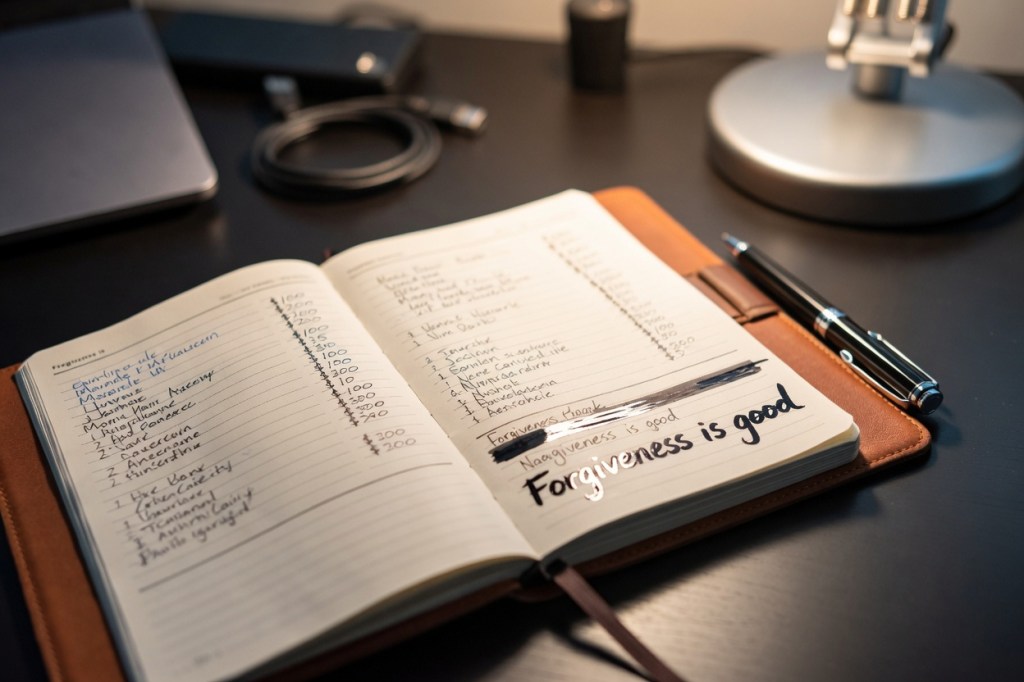
I captured this fragile boundary between hurt and healing in a poem I wrote called Unforgiveness. I hope it speaks to anyone currently trying to dull the sharp blade of a past betrayal.
Unforgiveness
Yesterday, you cut me open with careless words.
Today, I answered with a blade of my own—
Recklessness, turned inward,
Doubling the wound until it reflected
In both our chests.
With no hesitation, I met you with the sharp
Tongue of pride,
Words flying like sparks,
Scorching the soft skin of your face.
Then anger folded its wings.
Silence drifted down between us
Like warm rain on parched ground.
My nerves settled to a sudden calm,
Waves washing over me as I came
To you with open hands,
Penitence trembling in my palms.
I stared at you and spoke the quiet words:
“Please forgive me.”
“I forgive you,” you lamented.
And then we cried.
But later, my friend, you forgot
The sound of your own voice.
I watched you keep the ledger open,
The ink still wet,
Refusing to erase the grievance from the page.
You said the wound took time to heal,
Yet your eyes still measured its depth.
Hear me now—
This trembling cry rising from
The hollow chambers of my voice:
Release my name from the place
Where you’ve kept it.
Let the grievance fall from your heart,
Not because our sight fractured
The same light
Into different hues,
But because we were two souls
shaped by old sorrows,
Still walking in the pain of
Our childhood’s shadows,
Reaching through the dim
Corridors of our past,
Searching for the path that might lead us
Back to one another’s gentleness.
Hold me here: smudged, imperfect,
unmistakably human.
Release the debt that keeps us apart.
Let the calm rain gather in
the hollow we once shared,
and let us drink together,
hurt and healing,
from the same still water.
I beg you to dull the sharp
Blade of betrayal
Until it dissolves into something tender—
Something neither of us can name,
But both of us can finally bear.
© 2018, Edited 2026 by jjfaucher
Reference
Worthington, E. L. Jr. (2001). Five Steps to Forgiveness: The Art and Science of Forgiving. Crown Publishing.

 Keziah Thinks Press
What did this piece leave you thinking about?